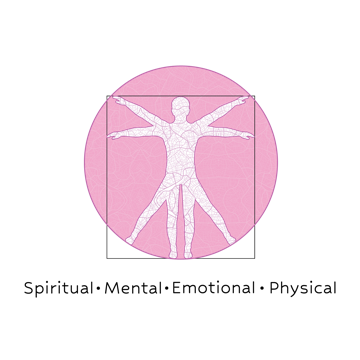
The client points to their shoulder. “It hurts here,” they say, pressing a thumb into the trapezius. The instinct—trained into us by centuries of reductionist medicine—is to look at the shoulder. To rub the shoulder. To treat the shoulder. But the shoulder is rarely the criminal; it is almost always the victim.
The Lie of Isolation
We are taught anatomy in pieces. The bicep is here. The femur is there. The liver is tucked underneath. We study the body as if it were a machine made of separate parts bolted together. But the living body knows no separation. It is a continuous, fluid matrix.
Enter the fascia. This connective tissue web wraps every muscle, every bone, every nerve, and every organ. It is the liquid crystalline matrix that holds us together. And it transmits force—and trauma—across the entire system.
When you sprain your ankle at age 12, the fascia tightens to protect the joint. You limp for a week. The ankle heals, but the fascial pattern remains. The tension travels up the lateral line of the leg, tilts the pelvis, twists the spine, and ten years later, manifests as a chronic migraine. Treating the head will never solve the ankle’s ghost.
Tensegrity: The Architecture of Life
The human body is not a stack of bricks (compression structure); it is a tensegrity structure (tension integrity). Like a suspension bridge or a camping tent, its stability comes from the balance of tension and compression.
If you pull on one corner of a tent, the entire structure shifts. The opposite side sags. The pole leans. The stress is distributed globally. This is why “chasing the pain” is a fool’s errand. The site of pain is often just the “loudest” point in a silent, system-wide struggle for equilibrium.
The Myofascial Meridians
Thomas Myers mapped these connections into “Anatomy Trains”—long lines of myofascia that traverse the body. These lines explain why a tight hamstring can cause a headache (Superficial Back Line) or why a C-section scar can cause neck pain (Deep Front Line).
The Deep Front Line is particularly crucial for emotional health. It runs from the toes, up the inner legs, through the pelvic floor, psoas, diaphragm, heart, and throat, ending at the jaw. This is the “core” of the body. When we are in a state of fear, this entire line contracts. We curl into a fetal position—physically or energetically.
Working with the Deep Front Line is not just about posture; it is about accessing the deepest layers of the self. It is about allowing the core to unfurl so that the breath can move freely and the heart can open.
The Emotional Anatomy
Different emotions tend to inhabit different territories in the fascial landscape. While every body is unique, patterns emerge:
When we release these areas, we often see an emotional release—tears, laughter, or a sudden memory surfacing. This is the “somato-emotional release.” It is the body finally exhaling the story it has been holding.
The Energetic Root
But we must go deeper than the tissue. Fascia is not just mechanical; it is piezoelectric. It generates an electrical charge under pressure. It is, in essence, a communication network faster than the nervous system.
It also holds memory. We store our unexpressed emotions, our braced reactions, and our traumas in the tissues. That “tight hip” might be the somatic container for a decade of financial stress. That “frozen shoulder” might be the physical manifestation of a burden you felt you couldn’t put down.
When we work manually with the body, we are not just rearranging meat. We are entering a conversation with the client’s history. We are asking the tissue, “What are you holding? And is it safe to let go now?”
The Role of Hydration
Healthy fascia is wet, slick, and mobile. Unhealthy fascia is dry, sticky, and brittle. This is not just about drinking water (though that helps). It is about movement.
Fascia acts like a sponge. When you stretch or compress it, you squeeze the “stale” water out. When you release, fresh, nutrient-rich fluid rushes in. This is why static sitting is the enemy of fascial health. The tissue dries out and glues together (adhesions).
Manual therapy and movement practices like yoga or Tai Chi work by re-hydrating the tissue, restoring the “slide and glide” between the layers so that the body can move as a unified whole.
The Three Layers of Release
The Whole Human
To heal, we must stop treating parts and start treating people. We must look at the whole architecture—the physical tensegrity, the emotional landscape, and the energetic flow.
The pain is the messenger, not the enemy. It is the red light on the dashboard telling you to check the engine. Don’t just smash the light. Pop the hood. Look deeper. The freedom you seek lies beyond the structural.